The Souvenir That Never Leaves the Drawer
Choose a travel souvenir for its personal meaning, not its shelf appeal, and bring home something you can place, use, or remember without adding clutter.
The usual travel souvenir mistake is buying an object because a trip seems to require one. The cost is not just luggage space: the keepsake may return home without a place, a use, or a memory attached to it. A better souvenir earns its place by recalling something specific.
You do not have to avoid shops or treat every postcard as clutter. Before buying, ask what caught your attention and whether that reason will matter after the journey home. If the answer is vague, pause rather than letting the departure clock choose for you.
Souvenir buying pressure
Travelers often browse a station kiosk or airport shop because buying something feels like a proper ending. The assumption that a trip needs a physical marker can produce a rushed purchase with little connection to the days that came before it.
Instead, record one detail: write down a café’s name, save a ticket stub, or note the sound of a particular street at dusk. If you still want an object, choose one that points back to that detail rather than one that merely names the destination.
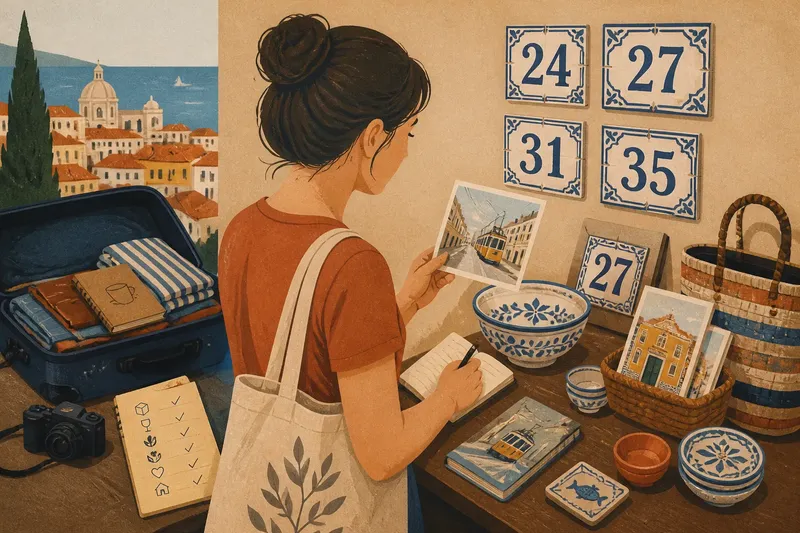
Say you have spent a few days in Lisbon and keep thinking about the hand-painted blue numbers on a neighborhood house. You photograph one, write down the street, and find a postcard nearby that reminds you of the walk. The result is a keepsake connected to an actual moment, rather than a token chosen because departure is near.
Meaning beyond appearance
Markets make attractive objects easy to mistake for personally significant ones. A ceramic bowl, woven bag, or polished stone may be well made, but admiration is not the same as knowing what you will do with it.
Before paying, name the memory you want the object to carry. If it connects to a person, place, meal, conversation, or activity, ask whether it will help you recall that connection. If its only appeal is that it looks like the destination, leave room to reconsider.
Imagine you see a ceramic bowl at a market and already serve fruit in similar dishes at home. You check that the bowl can fit on the kitchen shelf and decide it will be used in an existing routine; if it would need a new display spot, you leave it and write down what you liked about it. The first choice brings home a useful reminder, while the second preserves the memory without adding a storage problem.
A place at home
Souvenirs often end up in drawers because their owners decide where they belong only after returning. A framed print may have no open wall, a magnet may have no suitable surface, and a textile may not suit the room.
Choose the location before the object. A postcard can go in a travel journal, a useful cup can join the kitchen shelf, and a photograph can live in a digital album with a caption. If no existing place or routine can accommodate the keepsake, record the memory in another form.
Consider care as well as display. Fragile glass needs a safe place, fabric may need washing instructions, and some food products are temporary by nature. If keeping an item would require constant protection, choose a less demanding way to remember it.
Travel souvenir logistics
A meaningful object can still be a poor fit for the trip home. A bulky purchase may crowd out essentials, a fragile one may be difficult to carry, and certain foods or natural materials may face border restrictions.
Before buying, check how the item will be packed, whether it needs special handling, and whether it is permitted at your destination. Read the label, check carrier instructions, and consult applicable local rules when needed. If transport would dominate the experience, a photograph and a written note can keep the memory without the extra burden.
- Check whether the item fits beside your packed essentials; if it does, keep it on the list, and if it crowds them out, choose a smaller keepsake or a photo.
- Check whether the item is fragile; if you can protect it with the packing materials you have, consider buying it, and if not, choose a sturdier object or record it in a photograph.
- Check the label and relevant destination rules for food or natural materials; if the item is permitted, keep the purchase option open, and if its status is unclear or it is restricted, leave it behind and save the product details.
- Check whether the object needs special care; if you can provide that care at home, consider taking it, and if not, choose an item with simpler upkeep.
- Check whether you can name the memory the object represents; if you can, compare it with other keepsake options, and if you cannot, wait before purchasing.
- Check where the item would live at home; if an existing shelf, journal, or routine can hold it, consider buying it, and if there is no place, choose a note or digital image instead.
Choosing a travel souvenir?
What makes a souvenir personal?
A personal souvenir connects to something you noticed, did, or shared, rather than only carrying a place name. It might be an object you use or a note that explains why an ordinary-looking thing mattered during the trip.
Is a photo enough of a souvenir?
It can be, especially with a caption about the moment rather than just the location. Save the context while it is fresh; an unlabeled camera roll can become its own drawer.
Should I buy gifts for everyone?
Buy a gift when you can name a recipient and a likely reason they would enjoy it. A useful local item or a postcard with a personal note may suit someone better than a generic token bought under pressure.
What if I regret leaving an object behind?
Separate wanting the memory from wanting the object. If it is still available and fits your space, budget, and travel constraints, you can reconsider; otherwise, record what caught your attention and let the moment remain specific to the trip.
Gifts without obligation
Shopping for friends and relatives can turn a pleasant errand into a list of duties, especially when you are unsure of their tastes. The result may say “I was away” but little about either person.
Choose gifts by recipient, not by a rule that everyone needs something. A local food item may suit someone who enjoys cooking, while a postcard with a personal note may suit a friend who values conversation. If you cannot identify a likely use or shared association, bring back a story instead.
For children or colleagues, set expectations before the trip if gift buying tends to expand. A promise to send a postcard, share a photo, or bring one small treat can keep the gesture manageable.
After the trip
Give a keepsake its intended place after unpacking. Add its caption to the journal, put the useful item into rotation, or store a fragile object where it can be handled without ceremony. If you cannot decide what role it has, do not buy another object to settle the question.
Say you return with a postcard, a ticket stub, and no clear plan for either. You write the date and the name of the café on the postcard, then tuck both items into the travel journal; if the journal is already full, you photograph the stub with a short caption and recycle it. Either choice leaves you with a traceable memory, while avoiding a new pile of unassigned keepsakes.
A short note can preserve details that might otherwise fade: the maker’s name, the market where you found the object, or who was with you. That small bit of context helps a travel souvenir remain connected to its story, whether it ends up on a shelf or in a journal.