A Day Bag and Main Travel Bag That Work Together
A day bag and main travel bag keep transit essentials handy and the rest of your luggage packed, so you can move between stops without rummaging.
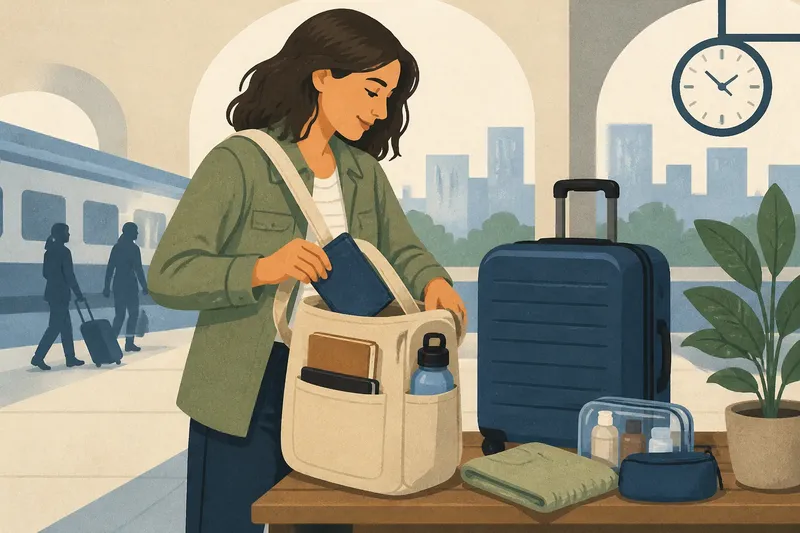
The common mistake with a day bag and main travel bag is asking one bag to carry the whole trip and keep today’s essentials handy. That usually means hauling more than you need on an outing or opening a suitcase on a station floor to retrieve a ticket. Give each bag a distinct job, then make the handoff deliberate.
This does not require buying more luggage. A canvas tote, small backpack, or crossbody can serve as the day bag; a suitcase or larger backpack holds the rest. The useful distinction is what you may need before the next unpacking stop.
Separate bag roles
Your main travel bag holds items that support the whole trip: spare clothes, sleepwear, toiletries, and gear reserved for later. Organize it for access at your lodging, not for repeated rummaging on a bus or in a café.
Your day bag carries what supports the current outing or transit leg. That might include your phone, wallet, identification, a water bottle, a light layer, and items needed during the next few hours. The contents change with the day; the division stays useful.
Check that the day bag is comfortable when full, closes securely, and lets you reach frequently used items without emptying it onto a seat. If it strains one shoulder or catches on crowded transit, choose a different style or carry less.
Choose what stays close
For each item, ask whether you could need it before reaching your room and whether losing access to it would disrupt the next leg. Keep items that meet either condition close in a consistent pocket or pouch; leave things needed only after arrival in the main bag.
- Check whether your phone, wallet, keys, and any identification needed for the next leg are in a secure, reachable pocket; if they are, leave them there, and if not, move them to one consistent pocket before departure.
- Check whether you need medication during the day; if you do, keep it accessible and follow its handling directions, and if you do not, store it according to its instructions rather than adding it to the day bag by habit.
- Check whether you expect to use a charging cable or power bank before unpacking; if yes, put the needed item in the day bag, and if no, keep it packed away.
- Check whether a water bottle is useful for the outing and can be carried securely; if yes, place it in a suitable pocket, and if not, leave it out rather than letting it crowd the bag.
- Check whether the forecast or planned setting calls for a light layer; if yes, carry one, and if not, keep it in the main bag.
- Check whether spare clothes, sleepwear, or extra shoes are needed before the next lodging stop; if no, leave them in the main bag, and if yes, transfer only the specific item required.
- Check whether receipts or transit cards are easy to separate from other belongings; if not, use a small pouch, and if they are, keep them in their assigned pocket.
- Check whether toiletries could leak or need to remain upright; if so, use a leak-resistant pouch in the main bag, and if not, keep them packed in their usual place.
Nearby is not the same as secure. Keep access items under your control, avoid leaving bags unattended, and use the storage arrangements available at your accommodation or transport stop. For documents or medication with specific handling needs, follow the issuer’s or manufacturer’s directions.
Use a travel routine
Before departure: Pack the main bag, then set aside the items needed before check-in or the next unpacking stop. Put those items directly into the day bag so a transit card does not disappear beneath folded clothes.
During transit: Keep the day bag with you and leave the main bag closed unless you have a clear reason to open it. If you retrieve something at a station or airport, use a stable surface and return the item to its usual pocket before moving on.
At check-in: Transfer only what the next outing calls for. You might take a light layer, sunscreen, or guidebook from the main bag; there is rarely a reason to move half the suitcase. Repack before leaving the room rather than sorting belongings in the doorway.
At day’s end: Return items to their assigned bags, discard rubbish, and charge devices in one consistent place. Set aside tomorrow’s likely essentials without carrying them around all evening.
Bag choices and questions
Can a tote replace a day bag?
Yes, if it closes securely, stays comfortable, and holds what you need without becoming awkward to carry. A tote is less convenient when you need both hands free or expect to use crowded transit.
Should the day bag go inside the main bag?
A foldable tote or compact backpack can travel inside the main bag when you do not need it. Keep it accessible before arrival, so retrieving it does not require unpacking everything in public.
What belongs in a day bag on a flight?
Keep close the items you may need during the journey, such as identification, documents, medication, a charging cable, and a light layer. Check the airline’s current baggage rules for restricted items or anything requiring special handling.
How do I avoid packing the same things twice?
Give each item one home and move it only when the day requires it. A cable pouch can stay in the main bag while the day bag carries only the cable or other items needed before the next unpacking stop.
A worked travel handoff
Say you arrive in Chicago before your room is ready and want to walk to a nearby café. Your starting setup is a main bag with spare clothes and toiletries, plus an empty day bag. You put your phone, wallet, identification, medication needed that day, a light layer, and the charger you expect to use into the day bag, then leave the suitcase closed at the storage arrangement provided by your accommodation.
At the café, imagine you decide to visit a museum before returning to check in. The day bag already holds the items needed for the outing, so you keep the suitcase stored and avoid carrying clothes and toiletries through the museum. The tradeoff is that anything left in the main bag remains unavailable until you return; if a specific item becomes necessary, retrieve that item rather than transferring the whole bag.
Reset between stops
When changing lodging, check the day bag and main bag before closing the main one: return misplaced items to their assigned pockets, separate damp or dirty belongings, and move only the next leg’s essentials into the day bag. If something is missing from its usual place, pause and look for it before leaving rather than assuming it will turn up later.
A day bag and main travel bag work best when each has a clear boundary. Keep the next leg’s needs close and the rest packed. Before leaving a seat or check-in counter, check both bags and the surface around them; small items are very good at making independent travel arrangements.